
How to Prepare IELTS Test for Foreign Universities in Karachi?
- Date November 11, 2025
Quick Highlights
- Step-by-step guidance to prepare for the IELTS test for foreign universities effectively at home.
- Understand the test structure, scoring system, and university requirements with simple, clear explanations.
- Follow daily practice routines using mock tests, speaking exercises, and reliable learning resources.
- Improve confidence, time management, and fluency to achieve higher band scores for international admission.
Do you want to prepare for the IELTS test for foreign universities? But don’t know where to start? Don’t worry, Safari is here to help you. Now, no more struggle with scrolling multiple guides and videos. The first thing is that feeling heavy and pressured is normal if you’re a first-time applicant. So, don’t judge yourself; make yourself relax and stay with us till the end to know where to start. Our blog will cover what IELTS is, how to prepare, mock and practice tests, and some effective tips. Above all, we are here to guide you on how to make yourself ready for IELTS and complete your part of the study abroad journey successfully.
What Is the IELTS Test for Foreign Universities?
It’s an English proficiency test that assesses your English language skills. Most of the universities abroad require it for admission purposes. So, basically, it tests how well you understand, speak, write, and read English. According to Jang, IELTS certification opens pathways for higher education, professional opportunities, and immigration worldwide.
Structure of the IELTS Test
The structure of the IELTS depends on four parts.
- Reading
- Writing
- Speaking
- Listening
Your final score is the average of all four parts. The ideal IELTS test score is 7.0 or above.
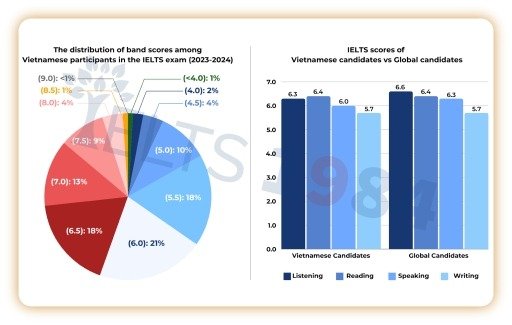
Quick Fact: Did you know? Engnovate’s 2023–2024 IELTS analysis shows that most Vietnamese candidates scored 6.0–6.5, with speaking as the lowest section. Globally, listening and reading scores were slightly higher, indicating that speaking and writing remain the sections where candidates face the most challenges.
Academic vs General Training IELTS Test
The academic IELTS test for foreign universities is designed for students applying to colleges and universities abroad. It checks if you can understand lectures, research material, and academic writing. The reading and writing tasks use academic topics similar to university learning.
The general training test is usually needed for work visas, job placements, or immigration programs. Its reading and writing sections are simpler and focus on everyday life situations. If you plan to study in another country, you should choose the Academic IELTS test, because foreign universities require it for admission.
How to Prepare for the IELTS at Home?
You can prepare at home, but only if you have a simple but fruitful plan. Such as prioritizing daily practice rather than studying for long hours. Must use trusted resources and track your weekly resources. Also, keep your goals clear and realistic.
Creating a Study Plan
First, create a fixed and consistent schedule, even if it’s for an hour. Break this one hour into four parts for reading, writing, listening, and speaking. Moreover, regularly reviewing your mistakes helps you understand patterns and improve steadily.
Resources for the IELTS Test for Foreign Universities
Always use resources for practice from the official website of IELTS. You can also watch the news on BBC and CNN, listen to podcasts, and watch YouTube lessons daily for your listening practice. Furthermore, use Cambridge IELTS books for real past exam papers. You can also join online study groups or forums for feedback and encouragement.
Section-wise Home Preparation for IELTS Test for Foreign Universities
Practice listening from headphones to match the exact exam conditions. Read articles and highlight difficult words to make your vocabulary stronger. Also, write one short essay regularly on any topic and compare it with the band 9 samples. For speaking, record your answers and correct fluency issues.
IELTS Mock Test for Foreign Universities
Mock tests help you experience the real exam before the actual test day. They show your strengths and weaknesses clearly. Taking regular mock tests builds confidence and improves timing. It also helps you understand how close you are to your target band score.
Benefits of Taking Mock Tests for IELTS
- Improves Time Management: Time is one of the biggest challenges in the IELTS test for foreign universities. Mock tests help you understand how long to spend on each question. You learn when to move on so you don’t get stuck. With practice, your pacing becomes natural and steady during the real exam.
- Builds Exam Confidence: Taking mock tests makes the testing environment feel familiar. When you know what to expect, you feel calmer and more focused. Confidence reduces fear and hesitation during speaking or writing tasks. This helps you perform naturally and clearly on the actual test day.
- Identifies Strengths and Weaknesses: Mock tests show exactly where you are improving and where you struggle. You can see which sections need more time and attention. This helps you create a smarter and more targeted study plan. Instead of guessing, you practice with purpose based on real performance.
- Improves Accuracy and Fluency: Repeating mock tests helps you avoid repeating the same mistakes. You slowly improve grammar, vocabulary, and sentence clarity. Your answers become faster, clearer, and more natural over time. This leads to stronger performance in both writing and speaking sections.
- Provides Professional Feedback at Safari Centre: At Safari Foreign Education and Immigration, experienced trainers review your mock test results in detail. They explain what is correct and what needs improvement for the IELTS test for foreign universities. You get personalized guidance instead of general advice. This support helps you move closer to your target band score confidently and steadily.
IELTS Practice Test for Foreign Universities
Practice tests help you understand the exam format clearly before the real test. They allow you to build consistency and accuracy in every section. When taken regularly, they improve your overall performance and boost confidence.
Importance of IELTS Practice Tests
- Practice tests show how questions look and feel, so the real exam doesn’t seem confusing or new. You learn what each section expects, and this reduces stress on test day. Familiarity leads to confidence and smoother performance.
- Taking practice tests regularly encourages a steady routine. Consistency matters more than long study hours once in a while. Small daily practice sessions lead to stronger skills over time.
- While practicing, you encounter new words, sentence structures, and writing patterns. Instead of memorizing lists, you learn language in context. This makes your speaking and writing sound more natural and fluent.
- The IELTS test for foreign universities is long, and staying fully attentive can be challenging. Practice tests help train your mind to stay focused for the full duration. Over time, your concentration becomes stronger and more controlled.
- Each practice test gives real feedback about what you’re doing well and what needs improvement. You can track your score over time and see steady growth. This makes your preparation more targeted and effective.
You can also take professional guidance and mock/practice tests at Safari Foreign Education and Immigration.
Tips for an Effective IELTS Test for Foreign University Preparation
- Practice forming sentences in English mentally. This strengthens fluency and reduces hesitation during speaking and writing.
- Discuss daily topics, write emails, or summarize news stories. Applying English to real situations improves practical communication skills.
- Clear pronunciation improves speaking scores. Record yourself and compare with native speakers to refine your accent and intonation.
- Good sleep, regular breaks, and balanced meals help maintain focus. Stress management boosts performance during long exam sessions.
- Break preparation into weekly targets. Meeting smaller goals motivates and ensures steady progress toward your target band.
- Enroll in sessions at Safari Foreign Education and Immigration for expert advice and targeted strategies to boost your IELTS score. Look at our students’ results and feedback from here.
Frequently Asked Questions
Q1: What is the difference between Academic and General Training IELTS for foreign universities?
Academic IELTS is required for university admission and focuses on academic reading and writing. However, general training is for work or immigration purposes. Students aiming for foreign universities must choose Academic IELTS.
Q2: Can I fully prepare for the IELTS test for foreign universities at home?
Yes, with a structured study plan, practice tests, mock exams, and consistent daily practice, home preparation is effective.
Q3: How do mock and practice tests improve IELTS performance?
They familiarize you with exam conditions, improve time management, identify strengths and weaknesses, and boost confidence before the real exam.
Q4: How long should I prepare for the IELTS test for foreign universities to achieve a high band score?
Most students need 8–12 weeks of consistent preparation, it also depends on their English proficiency and target band score.
Conclusion
Lastly, preparing for the IELTS test for foreign universities requires structured practice, mock exams, and focused strategies. Consistent preparation, section-wise practice, and professional guidance ensure confidence and better results.
So, take the first step toward your international study goals today. Contact Safari Foreign Education and Immigration to schedule your personalized IELTS preparation and get a customized plan tailored to your target band score.

You may also like

Studying in USA: Visa Requirements for Karachi Students 2026

Studying in Canada: How to Study, Work, and Immigrate?