
Studying in Canada: How to Study, Work, and Immigrate?
- Date January 6, 2026
Quick Highlights
- Studying in Canada provides globally recognized degrees, practical work experience, and strong career opportunities.
- Also, Canadian education is more affordable than in the USA, UK, and Australia, with part-time work rights available.
- Quick research shows 2024 study permit approvals dropped 35%, affecting Pakistani students’ competition and planning.
- Post-graduation work permits and Canadian work experience create clear pathways to permanent residency for graduates.
Dreaming of studying in Canada but feel stuck between limited local opportunities, rising competition, and uncertain career growth? Many graduates and professionals want to study further internationally to improve their future and income. But they don’t know where to start, how to manage costs, or whether it will actually lead to work and permanent settlement.
This guide breaks down everything you need to know, from choosing the right program and getting a study visa to working legally and immigrating after graduation. By the end, you’ll have a clear, practical roadmap to turn your Canadian study dream into a real, long-term opportunity.
Why Studying in Canada Is a Smart Choice?
Degrees That Employers Actually Value
Canadian universities and colleges focus heavily on practical learning, not just theory. Many programs include internships, co-op work, or industry projects that help students gain real experience before graduating. Degrees from Canada are also recognized worldwide, including in the Middle East, Europe, and Australia, regions where you can seek higher-paying jobs. So, this means your education does not limit you to Canada only; it opens global career doors.
Lower Cost Compared to Other Study Destinations
For Pakistani students, cost is one of the biggest concerns. Canada is more affordable than the USA, UK, and Australia in both tuition and living expenses. Colleges and public universities offer quality programs at reasonable fees, especially diplomas and applied degrees. Moreover, students are allowed to work part-time, which helps manage monthly expenses and reduces financial pressure on families back home.
A Safe, Welcoming, and Diverse Environment
Canada is one of the safest countries in the world and is known for being friendly to immigrants. You can find it easier to adjust because of strong Muslim communities, halal food availability, and cultural acceptance. Discrimination is low, and international students are also protected by law. So, this creates peace of mind for both students and their families.
Legal Work Rights During and After Study
Unlike many countries, Canada allows international students to work while studying in Canada and full-time during breaks. After graduation, you can apply for a Post-Graduation Work Permit that can last up to three years. This work experience is crucial because it helps graduates earn in dollars and qualify for permanent residency later.
Clear Pathway to Permanent Residency
Canada is one of the few countries where studying can directly lead to immigration. Canadian education and work experience increase your immigration points significantly. In addition, programs like Express Entry and Provincial Nominee Programs favor international graduates. For students who want long-term stability and better income, this clear PR pathway makes Canada a smart and practical choice.
Canada’s Education System for International Students
Types of Institutions in Canada
Studying in Canada offers three main types of institutions, and choosing the right one depends on your budget, academic background, and career goals. Universities focus more on academic and research-based education and are ideal for students aiming for professional or global careers. However, colleges are popular among Pakistani students because they offer practical programs, lower fees, and strong job outcomes. Conversely, polytechnics sit between colleges and universities, combining hands-on training with advanced technical skills, which suits students who want quick entry into skilled jobs.
Study Levels Available in Canada
Canada’s education system is flexible, which helps students from different academic backgrounds. Diploma and certificate programs are best for recent graduates or working professionals who want fast, job-focused education at a lower cost. Bachelor’s degrees are also suitable for students seeking long-term academic growth and international recognition. Master’s and PhD programs attract students aiming for leadership, research, or high-paying roles, and also give strong advantages for immigration.
Popular Courses for Studying in Canada
Pakistani students often choose programs that lead to jobs and immigration benefits. The most popular options include:
- Business and Management: Builds skills for corporate jobs and entrepreneurship
- Information Technology (IT): High demand in software, data, and cybersecurity
- Engineering and Technology: Strong career growth and PR opportunities
- Health Sciences and Nursing: Shortage-based field with fast job access
- Hospitality and Tourism: Practical programs with quick employment
- Accounting and Finance: Recognized credentials with global value
Overall, choosing the right course can greatly improve your chances of employment and permanent residency after graduation.
How to Study in Canada as an International Student?
Choosing the Right Course and Designated Learning Institution (DLI)
The most common mistake Pakistani students make is choosing a course without checking its job value or immigration benefits. Always select a Designated Learning Institution (DLI) because only DLIs allow you to get a study permit. Choose programs linked to high-demand jobs such as IT, healthcare, business, or engineering. Also, colleges are often a better option for students with average grades or limited budgets because they offer practical skills and strong employment outcomes. Also, check if the program is PGWP-eligible, as this directly affects your future work and PR chances.
Eligibility Requirements for Studying in Canada
Canada’s eligibility rules are clear, but your profile must be well-planned.
- Academic qualifications
Your previous education must match your chosen course. For example, business students should not suddenly apply for unrelated technical programs. So, a clear study progression improves visa approval chances. - English or French language proficiency
Most institutions accept IELTS Academic, while some also accept PTE or Duolingo. A strong language score not only helps with admission but also supports your visa case by proving you can study and work in Canada.
Canada Study Visa and Study Permit Process
A strong study visa application depends on correct documents and a logical plan.
Required documents for studying in Canada include
- Letter of Acceptance from a DLI
- Valid passport
- Proof of funds (tuition + living cost)
- IELTS or an accepted language test result
- Statement of Purpose (SOP)
- Academic transcripts and certificates
- Medical exam and police certificate (if required)
Step-by-step application process
First, secure admission from a DLI. Next, gather financial proof and write a strong SOP that explains your study goals and plans. Then, apply online for the study permit through the official portal. After the biometric submission, wait for the decision. If approved, you will receive a Port of Entry letter, which allows you to travel and start your studies in Canada.
Want to skip all the hassle? Safari Foreign Education and Immigration makes studying in Canada simple and stress-free. From course selection and admissions to visa filing and post-study guidance, their expert team handles everything for you. Also, with professional support at every step, you can focus on your future while they take care of the process.
Working While Studying in Canada
On-Campus and Off-Campus Work Options
International students in Canada can work on campus without a separate work permit. These jobs include library work, labs, cafeterias, and admin offices. Off-campus jobs are also allowed and are more common for Pakistani students. These include retail, warehouse, restaurant, delivery, and customer service roles. Moreover, off-campus work helps students manage living costs and gain Canadian experience, which is very useful later for jobs and immigration.
Work Hours Allowed for International Students in Canada
During regular study sessions, international students can work up to 20 hours per week. During scheduled breaks, such as summer or winter holidays, students can work full-time. You must remain enrolled full-time and make good academic progress to keep your work rights. However, working within legal limits is important because violating work rules can affect your future visa and PR applications.
Co-op Programs and Internships in Canada
Many Canadian programs include co-op or paid internships, which allow students to work in their field of study while earning money. These roles provide real Canadian work experience and improve job chances after graduation. Students also need a co-op work permit. Co-op programs are especially valuable for IT, business, engineering, and healthcare students.
Work Opportunities After Studying in Canada
Post-Graduation Work Permit (PGWP) Explained
The Post-Graduation Work Permit allows international students to work in Canada after completing their studies. It is an open work permit, which means you can work for any employer in any city. This is also very important for Pakistani students because it helps recover study costs and gain local experience. Furthermore, Canadian employers prefer candidates with local education and work exposure, making PGWP a strong career tool.
Duration and Eligibility of PGWP
The length of the PGWP depends on your program duration. If your course is 8 months to under 2 years, the work permit usually matches your study length. Programs of 2 years or more can lead to a PGWP of up to 3 years. To qualify, your institution also must be PGWP-eligible, and you must complete your program full-time. But choosing the wrong college or course can cancel this benefit, so planning matters.
Benefits of Gaining Canadian Work Experience
Canadian work experience increases your chances of permanent residency through programs like Express Entry and PNPs. It also improves your salary level and job stability. Many Pakistani graduates move from survival jobs to professional roles within a year. Working in Canada also helps you build references, understand workplace culture, and secure long-term settlement options.
Immigration Pathways After Studying in Canada
Express Entry System for International Graduates
The Express Entry system is the fastest way for international graduates to gain permanent residency in Canada. Pakistani students who studied in Canada can earn extra Comprehensive Ranking System (CRS) points for Canadian education and work experience. Additionally, a higher CRS score increases your chances of receiving an Invitation to Apply (ITA) quickly. Planning your education and work strategically in Canada can make Express Entry an efficient route to PR.
Canadian Experience Class (CEC)
The Canadian Experience Class is designed specifically for international students and temporary workers with Canadian work experience. To qualify, you need at least 12 months of skilled work in Canada, which can include PGWP employment. CEC also prioritizes candidates already integrated into the Canadian labor market, making it ideal for Pakistani graduates who want a smooth transition from student life to permanent residency.
Provincial Nominee Programs (PNPs)
Provincial Nominee Programs allow students to apply for PR through the province where they studied or worked. Each province has its own PNP targeting high-demand skills like IT, healthcare, engineering, and business. For example, Ontario and British Columbia offer streams specifically for international graduates. PNPs often require a job offer, but they give extra points toward Express Entry and can fast-track PR applications. This pathway is also excellent for anyone seeking both employment and long-term settlement in Canada.
Quick Research
Do you know? Recent data from PIE News (2024) shows Canada’s study permit approvals are projected to drop 35% in 2024 due to government caps. Major source countries like India, Nigeria, and Nepal saw declines of over 50%, and Pakistani students are indirectly affected as competition rises. Provinces like Ontario and Nova Scotia were hit hardest, dropping around 55%, highlighting the need for careful planning and choosing PGWP-eligible programs.
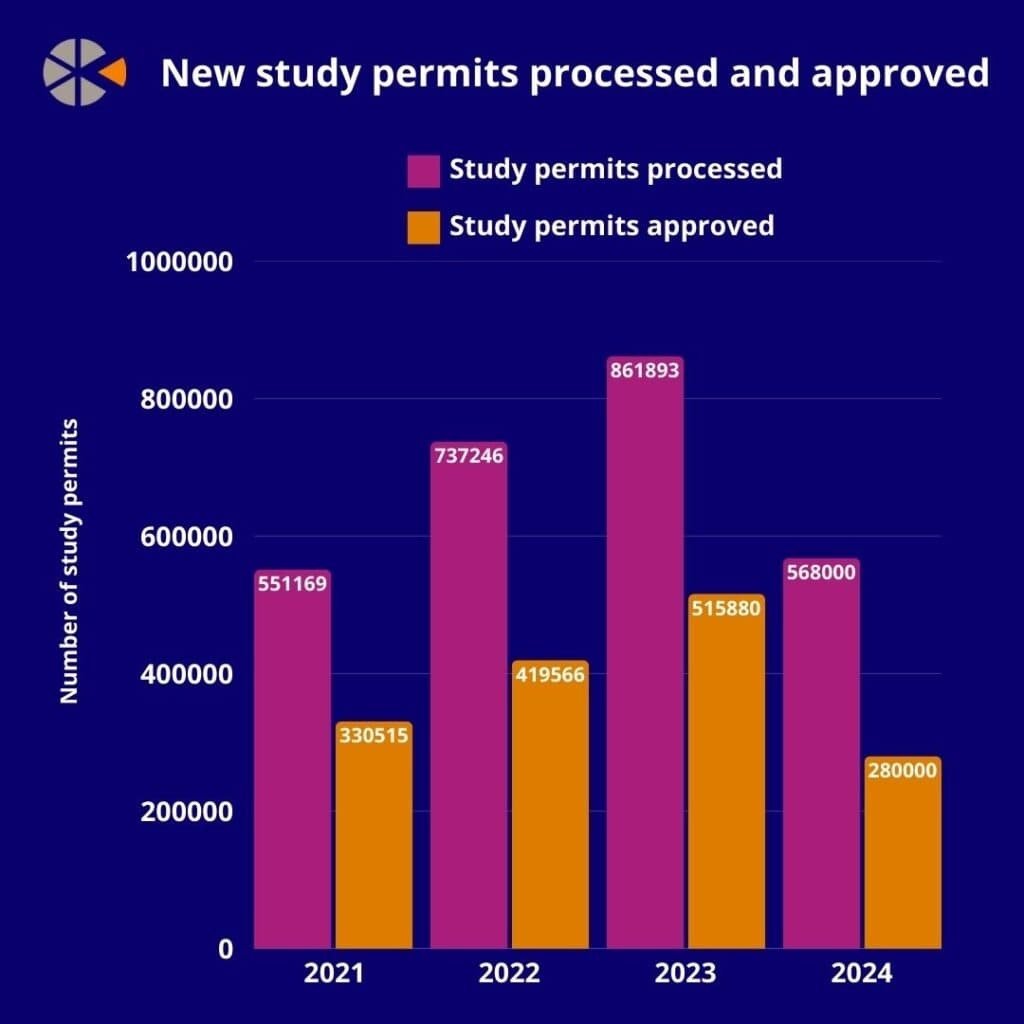
Disclaimer: Data for 2021–Oct 2024 is sourced from IRCC. Full-year 2024 figures are estimates extrapolated from Jan–Oct 2024 and prior IRCC data. Projections may change based on policy updates and evolving conditions.
How Studying in Canada Helps You Immigrate?
CRS Score Advantages for Canadian Graduates
Studying in Canada gives Pakistani students a major boost in the Comprehensive Ranking System (CRS) used for Express Entry. Canadian degrees, diplomas, and post-secondary credentials earn extra points compared to foreign education. In addition, any Canadian work experience gained during or after studies further increases your score. A higher CRS score not only improves your chances of receiving an Invitation to Apply (ITA) but also shortens the waiting time for permanent residency.
Job Offers and Permanent Residency Opportunities
Having a Canadian job offer after graduation significantly improves your PR prospects. Employers often hire international graduates on a PGWP, which provides valuable Canadian work experience. This experience is also recognized by immigration programs like CEC and PNPs, making it easier to secure permanent residency. For Pakistani students, this combination of education and work creates a clear pathway to settle in Canada while building a stable, higher-paying career.
Challenges of Studying in Canada and How to Overcome Them?
Cultural Adjustment in Canada
Many students face cultural shock when they first arrive in Canada. Differences in communication style, classroom participation, and social norms can feel overwhelming. To adjust faster, engage with local student groups, join Pakistani or Muslim communities, and participate in campus activities. Moreover, building a support network early helps you feel at home, improves confidence, and reduces loneliness.
Weather and Lifestyle Changes
Canada’s cold winters, especially in cities like Toronto, Ottawa, and Calgary, can be challenging for students from warmer climates. Dressing in layers, investing in good winter clothing, and gradually adapting to outdoor activities can make the transition smoother. Additionally, lifestyle changes like cooking meals, managing time, and balancing work and study require planning but improve independence and life skills.
Managing Expenses as an International Student
Living and studying in Canada can be expensive, and you may struggle with budgeting. Plan monthly expenses for rent, food, transport, and books, and try to work part-time under legal limits. Also, look for affordable housing, student discounts, and scholarships. However, careful planning and smart money management ensure you can focus on studies while gradually building Canadian work experience.
Tips for International Students Studying in Canada
Finding Accommodation in Canada
Finding safe and affordable housing is crucial for your move to Canada. On-campus residences are convenient but often expensive and limited. You should prefer shared apartments or homestays in nearby neighborhoods. Furthermore, research rental websites, join student Facebook groups, and visit potential places before signing a lease. Choosing the right accommodation not only reduces stress but also helps you focus on studies and work opportunities.
Part-Time Job Search Tips
Working part-time while studying helps manage expenses and gain Canadian experience. Start by applying for on-campus jobs, which are easier to get and flexible with class schedules. For off-campus jobs, check local job boards, networking events, and career fairs. Also, preparing a Canadian-style resume and cover letter increases your chances. You should also consider co-op programs or internships in their field, as these improve future work and PR opportunities.
Building a Career in Canada
Building a career in Canada requires planning beyond just working while studying in Canada. Networking is key; connect with professors, join professional student groups, and attend industry events. Canadian employers also value local work experience, so internships, co-op programs, and volunteer work can be stepping stones to full-time roles. Developing skills in high-demand areas like IT, healthcare, engineering, or business enhances your job prospects and supports your long-term immigration goals.
Conclusion
In conclusion, Canada offers Pakistani students a unique combination of quality education, practical work experience, and clear immigration pathways. While challenges like cultural adjustment, weather, and expenses exist, careful planning, part-time work, and networking can help you overcome them. Moreover, with the right course, institution, and professional guidance, you can maximize your career and settlement opportunities. For anyone aiming to grow academically, professionally, and personally, studying in Canada is a smart, long-term investment.
Frequently Asked Questions
Q1: How early should I start preparing to study in Canada?
It’s best to start 8–12 months before your intended start date to handle admissions, visa, and financial planning smoothly.
Q2: Can I switch my program or institution after arriving in Canada?
Yes, but you must update your study permit and ensure the new program or institution is a DLI to maintain legal status.
Q3: How can a consultant like Safari help me beyond visa applications?
Safari guides course selection, work permits, internships, and PR pathways. Learn more in our blog, Best Consultant in Karachi for Canada Immigration, for a better understanding.
Q4: Are there networking opportunities for international students in Canada?
Yes, universities offer clubs, career fairs, and alumni networks that help Pakistani students build connections and improve career prospects.
Official Study & Visa Resources

You may also like

Studying in USA: Visa Requirements for Karachi Students 2026
Discounted LanguageCert Vouchers for Pakistani Students