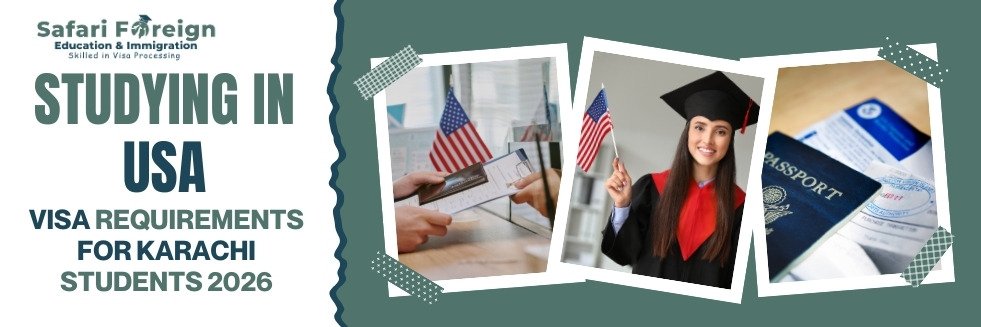
Studying in USA: Visa Requirements for Karachi Students 2026
- Date January 6, 2026
Quick Highlights
- Studying in USA made simpler with step-by-step visa guidance tailored for Karachi students.
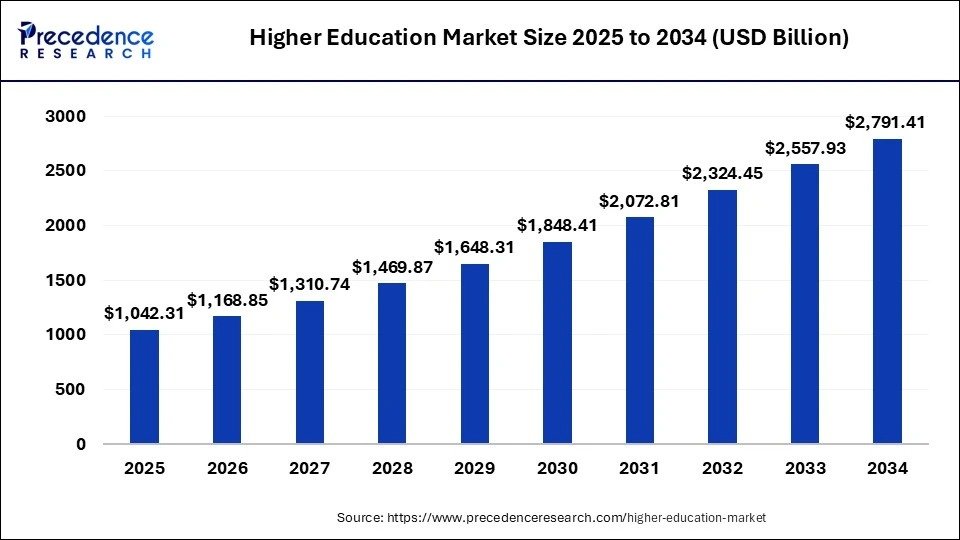
- The global higher education market is projected to reach USD 2,791.41 billion by 2034.
- Rising international student demand reflects strong growth in overseas education opportunities.
- Also, expanding the education sector increases acceptance rates and long-term career prospects globally.
Do you also find it difficult to understand studying in USA visa requirements? Many Karachi students face confusion over which documents to submit, how to show financial proof, or what to expect during the visa interview. This uncertainty can also delay applications or even lead to rejection.
In this guide, we simplify the entire process specifically for Karachi applicants in 2026, breaking down every requirement step by step. By reading this, you’ll also gain clarity, save time, and boost your chances of successfully securing a student visa to pursue your academic dreams in the USA.
Types of Student Visas for Studying in USA
F‑1 Visa – Academic Students
The F‑1 visa is the most common choice for your planning to study for a full academic degree in the United States. It’s meant for students enrolled in bachelor’s, master’s, PhD, or full‑time English language programs at SEVP‑certified colleges and universities. Moreover, F‑1 holders can work on‑campus part‑time while studying in USA and may be eligible for Optional Practical Training (OPT) after graduation, allowing them to gain work experience related to their field. This visa also stays valid for the length of your academic program, plus a short grace period.
J‑1 Visa – Exchange Programs
The J‑1 visa is for students and professionals coming through official exchange programs. These can include university exchange semesters, internships, research projects, or cultural exchange opportunities sponsored by approved organizations. Additionally, A J‑1 visa often includes a cultural component and may even come with partial funding or scholarships through international programs. Some J‑1 students must follow a two‑year home residency rule after their program ends before applying for certain other U.S. visas unless they get a waiver.
M‑1 Visa – Vocational and Technical Studies
The M-1 visa is for individuals seeking vocational or non-academic training in the U.S., such as technical skills, flight training, culinary arts, or other hands-on programs that don’t lead to a traditional academic degree. Also, M‑1 students are not allowed to work during their studies, and extensions are harder compared to F‑1 visas. The stay is usually limited to the duration of the training program plus a short time to prepare for departure. In addition, this visa is best for short, skill‑based courses rather than long degree programs.
Eligibility Criteria for Studying in USA for Karachi Students
Admission to SEVP‑Certified Institutions
To qualify for a US student visa, you must first get an offer from a U.S. college or university that is certified by the Student and Exchange Visitor Program (SEVP). Only these schools can issue the Form I‑20, which you need to apply for an F‑1 (or M‑1) visa. However, without a valid I‑20 from an SEVP‑approved institution, the U.S. consulate in Karachi will not accept your visa application. SEVP certification also ensures the school meets U.S. government standards for enrolling international students and tracking them through SEVIS.
Financial Proof Requirements
You must show real and sufficient funds to pay for at least the first year of your tuition and living expenses without relying on illegal work in the U.S. This proof usually comes from bank statements, sponsor letters, scholarship awards, or a mix of these. For example, you can show 6‑month bank records or official sponsorship documents during the interview. The exact amount varies by school and city, but you should prepare well in advance to meet these costs, because your I‑20 will list the amount you must prove.
English Language Proficiency
Most U.S. universities require proof that you can understand and use English well in class. This is often done through tests like TOEFL, IELTS, or the Duolingo English Test, and the required score depends on the program and school you choose. Even if the U.S. government does not require a specific score for the visa itself, your university will also usually demand proof of proficiency before issuing your I‑20. Also, make sure you check your chosen school’s minimum score requirement early.
Quick Research
Do you know? According to Precedence Research, the higher education market is projected to grow from USD 1,042.31 billion in 2025 to USD 2,791.41 billion by 2034, showing strong global demand for overseas education. This growth further strengthens opportunities for international students seeking quality education abroad.
Required Documents for a Visa Application for Studying in USA
Passport and Visa Forms
Your valid passport is the first must‑have document when applying for a U.S. student visa. It must be valid for at least six months beyond your planned stay in the USA and have enough blank pages for the visa stamp. Along with it, you must complete and print the DS‑160 form confirmation page, which includes a barcode used by the U.S. Embassy or Consulate in Karachi during your interview. However, without this DS‑160 barcode sheet and a valid passport, your visa interview won’t proceed.
Form I‑20 or DS‑2019
After you get accepted by an SEVP‑certified U.S. school, that school will send you the Form I‑20 (for F‑1/M‑1 visas) or DS‑2019 (for J‑1 visas). These forms also prove you’ve been authorized to study in the U.S. and list your program, start date, and estimated costs. You must bring the original signed form to both your visa interview and when entering the U.S. The consular officer will also check it carefully, so keep it safe and don’t carry just a copy.
SEVIS Fee and Payment Receipt
Before your interview, you must pay the SEVIS I‑901 fee online. This fee supports the Student and Exchange Visitor Information System that tracks international students. After payment, print the SEVIS fee receipt; this is a separate document from the visa fee and is mandatory at your interview. The consulate will also verify that the SEVIS ID number on your receipt matches the one on your I‑20/DS‑2019, so double‑check that they are the same.
Financial and Academic Documents
At your visa appointment, bring financial documents showing you (or your sponsor) can cover tuition and living costs for at least the first year. This can include bank statements, sponsor letters, scholarship award letters, or loan documents. Also, carry academic records like transcripts, certificates, and any required test scores (IELTS, TOEFL, SAT, etc.). These show the officer that you are academically prepared and financially capable of studying in USA Consular officers often look closely at these to assess your preparedness and credibility.
Visa Application Process For Studying in USA
Scheduling and Attending the Interview
After you complete your DS-160 form and pay the visa fee, the next step is to schedule your visa interview at the U.S. Embassy/Consulate in Pakistan, which is typically in Islamabad or Karachi. You will pick a date online through the U.S. visa appointment system and upload your DS-160 barcode and passport details. On the interview day, arrive early with all original documents. Moreover, dress neatly and carry your I-20/DS-2019 and SEVIS fee receipt. The interview officer will also review your goals for studying in USA and documents and decide if you qualify for the student visa.
Biometric and Fingerprint Submission
Before the interview, you must submit biometric data, which includes your fingerprints and a digital photo. This generally occurs at a Visa Application Center (VAC) before your embassy interview day. The biometric step also links your identity to your DS-160 and SEVIS records. The staff will check your fingerprints against security databases and confirm your photo. Moreover, keep your appointment slip and passport ready—without this step completed, the embassy will not proceed with your interview.
Common Interview Questions
During the interview, the officer will focus on your intent and plans. Common questions include:
- Why did you choose this university/program?
- How will you fund your studies and living costs?
- What are your study plans after you graduate?
- Do you have family or ties in Pakistan?
- Have you applied to other countries/universities?
- When do you plan to return home after your studies?
Answer clearly and honestly. Also, show that you understand your academic path and have real plans to study and return home after completion.
Tips to Improve Visa Approval Chances For Studying in USA
Demonstrating Strong Ties to Pakistan
Visa officers want proof that you will return to Pakistan after completing your studies. As a Karachi student, you should clearly show your family ties, property, business interests, or job plans in Pakistan. This can also include family details, a family business, property documents, or a future job offer letter. Even explaining how your U.S. degree will help you work in Pakistan matters. Speak confidently about your plans. In addition, never say you want to settle permanently in the USA.
Clear Academic and Career Goals
You must explain why you chose your degree, university, and studying in USA. Your answers should match your past education. For example, if you studied commerce, choosing a business or finance degree makes sense. Also, explain how this degree fits your long-term career in Pakistan. Visa officers reject students who sound confused or unprepared. Keep your goal simple, logical, and realistic. Show that you researched your program well.
Providing Honest and Complete Documentation
Never submit fake or unclear documents. U.S. visa officers are trained to detect inconsistencies. Make sure your bank statements, sponsor letters, academic records, and forms all match the information on your I-20 and DS-160. If someone is sponsoring you, be ready to explain their income source clearly. Conversely, missing or misleading documents often lead to rejection. Also, honest paperwork builds trust and strongly improves approval chances.
If you want professional guidance? Contact Safari Foreign Education and Immigration Promotion to assist students with university selection, document preparation, and interview readiness based on current visa requirements. Moreover, having expert support can help applicants stay organized, present their case clearly, and improve overall confidence during the application process.
Conclusion
Lastly, securing a U.S. student visa may seem complex, but with the right preparation, it becomes manageable. From choosing the correct visa type to preparing documents and interviews, every step matters. When you plan early, stay honest, and clearly define their goals, you significantly improve their chances. Also, with the right guidance and clarity, your dream of studying in USA can turn into a successful reality.
Frequently Asked Questions
Q1. Can I change my university after my visa is approved?
Yes, but you must transfer your SEVIS record to the new institution and receive a new I-20 before classes begin. You should inform the U.S. embassy only if the change happens before traveling.
Q2. Is it possible to defer my admission after getting a student visa?
Yes. If your university allows deferral, you must get an updated I-20 with the new start date. In some cases, you may need to reappear for an interview depending on the delay.
Q3. Can my family visit me while I am studying in the USA?
Immediate family members can apply for visitor visas. Approval depends on their travel purpose, financial status, and intent to return to Pakistan after the visit.
Q4. What happens if my visa application is rejected?
You can reapply, but only after improving the weak areas of your previous application. Reapplying without changes typically results in another rejection.
Official Study & Visa Resources
U.S. Embassy in Pakistan – Student Visa Information
U.S. Consulate General Karachi – Visa Services
Student Visa (F-1, J-1, M-1) – U.S. Department of State
SEVP (Student and Exchange Visitor Program)—Official Guide
Pay SEVIS I-901 Fee (Official U.S. Government Site)
DS-160 Online Visa Application (U.S. Consular Electronic Application Center)

You may also like
Studying in Canada: How to Study, Work, and Immigrate?
Discounted LanguageCert Vouchers for Pakistani Students